
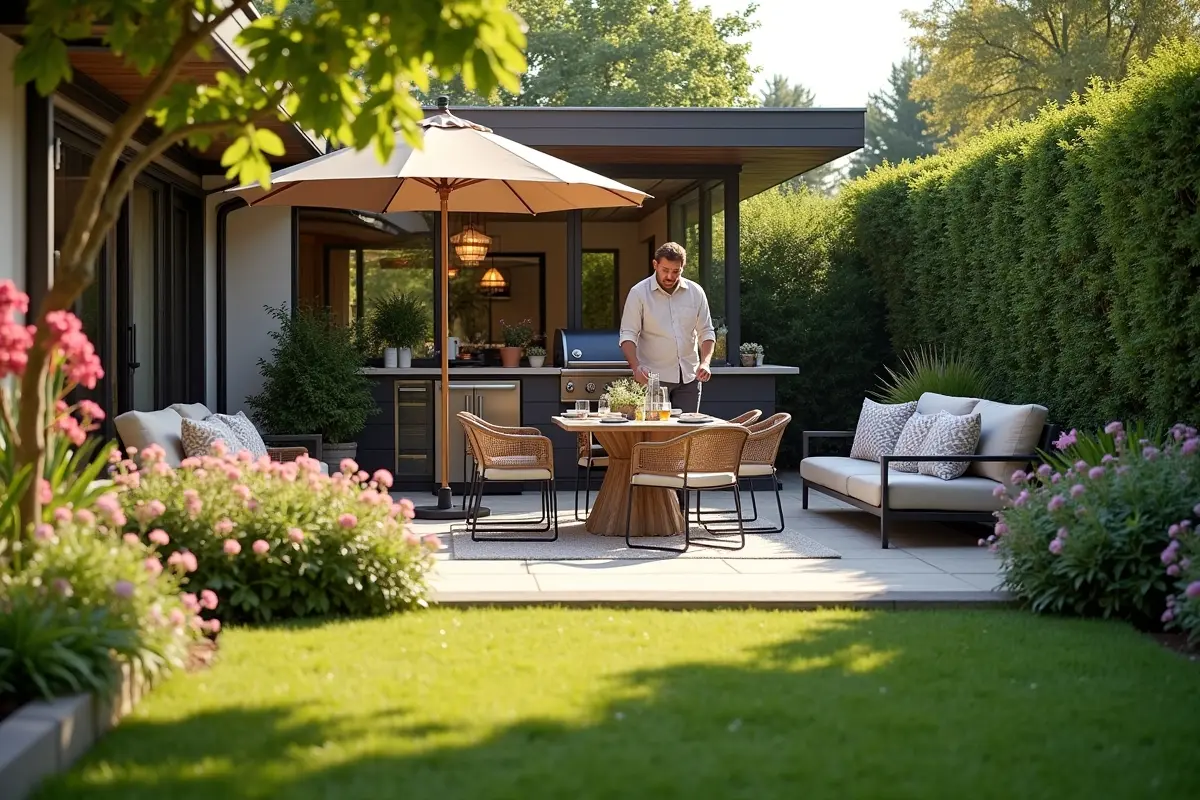
When considering summer parties, most people think about cushions, lights, and if the outside dining set made it through winter unscathed. It’s a fair first thought, but it’s just that – a first thought. None of the pretty stuff matters if the timber underneath is grey, brittle, or quietly rotting.
Contents
The splash test tells you everything
Before making a purchase or grabbing a brush, perform a basic test. Pour water on a few areas of your deck. If the water forms into beads and stays on the surface, your current sealer is still effective. If the water immediately absorbs, the wood is exposed and defenseless – especially against UV degradation, which is particularly strong in summer.
UV light from the sun deteriorates lignin within the wood. This naturally occurring biopolymer is responsible for maintaining the structural integrity of the wood cell walls. What we see as aesthetic greying is the beginning of the weakening and degradation of the wooden fibres. The harder the wood, the better its natural defences. For example, Merbau and Spotted Gum are relatively hardy hardwoods but don’t expect them to survive long unsealed while being blasted by the sun. Most softwoods (like treated pine) will do so even less.
Clean the structure before you clean the surface
People often try to save money when preparing a deck, but the truth is that this is the most common place to see finish failures.
First, give your deck an overall health check. Look for rusty fasteners and nail pop. Remember, the nails and screws that hold your deck together are under constant pull from seasonal expansion and contraction. And, in regions with actual season changes, summer board games and cookouts introduce a level of physical force that can unseat a board. Loose boards are a safety issue – not an aesthetic one. Look for joist boards with fungal decay, which is a sign that water was trapped below the board. This is _especially_ likely to happen under planters and rugs that have stayed in the same spot through the wet season.
For washing, oxygen bleach does a better job on timber than chlorine bleach. It’s effective in killing mould at its root and is non-corrosive to wood or gardens. Pressure washing is effective too but demands the right amount of PSI. Too much will damage wood and raise the grain to create a rougher surface requiring more frequent pressure washings. Most residential decks can be washed with a pressure washer that has 1,500 PSI or less, but only if you use a fan tip rather than a pin tip.
If you’re dealing with old, failing acrylic stain you’ll need a stripping agent to get it off, and you’ll need this regardless of the type of new product you’re going to use. Sealers and stains need to penetrate the wood – not seal over the top of a failed surface. Afterwards oxalic acid brighteners are recommended as well. These things are kind of magical in removing the grey oxidation from your wood and returning it close to its natural hue. As a result, any finish you apply next will look cleaner and more vibrant.
When a wash isn’t enough
There is a certain level of damage or deterioration for which a DIY clean and recoat isn’t going to be effective. For example, when timber has been subjected to years of UV, or excessive moisture due to a lack of appropriate protective sealers, Deck Restoration at a professional level is the answer. The coating can only bring timber back so far. To get wood in the best condition to then coat it, the 40-80 grit class sanding belt has to be used to completely remove all remnants of old product and take the wood back to its fresh state. Reopening its pores allows the most optimal amount of new product to be absorbed. Individual board’s structural integrity can also be compromised if they’re not properly protected.
Applying the finish correctly
Timing is more important than you think. Oils and stains put on in direct midday sun will dry too quickly on the surface, trap solvent underneath, and leave lap marks that more or less can’t be fixed. Apply in early morning or on overcast days so the product has time to sink in before it starts to set.
With high natural oil content timber species like Teak or Merbau, tannin bleeding through a new finish is a common issue if the wood isn’t sufficiently prepared or primed. Run a check between the product specs and your timber species before you go any further.
If your deck is next to a pool, slip resistance is a product spec, not an afterthought. Some oils will give you a fantastic finish but a surface rating that makes it unsuitable for wet barefoot traffic.
Setting up the space without damaging it
Once the timber is sealed and dry, consider layout for airflow, not just looks. Heavy planters and outdoor rugs sitting direct on sealed timber will trap moisture underneath them and create localized issues for rot and permanent discoloration regardless of how good the seal is. Raise planters on feet, rotate rugs regularly through summer, and leave gaps that let the boards breathe.
Thermal expansion is the other thing most people ignore. Boards move in heat – that’s normal – but furniture positioned tightly against fixed structures can create pressure points that stress boards over time. Leave clearance, especially where decking meets the house or a fence.
Get the timber right first. Everything else sits on top of it.